You Gotta See Kandy from These Spots — Pure Magic Awaits
If you're chasing the soul of Sri Lanka through your lens, Kandy is a dream come true. I’ve wandered hills draped in mist, temples glowing at dawn, and viewpoints that make you pause — really pause — and breathe. This isn’t just about snapping photos; it’s about capturing moments where light, culture, and nature collide. From golden sunrises over sacred lakes to hidden trails with city panoramas, Kandy offers frames you’ll want to hang on your wall. Let me show you where.
Why Kandy Is a Photographer’s Hidden Gem
Kandy, nestled in the central highlands of Sri Lanka, is a rare fusion of spiritual heritage, colonial echoes, and lush natural beauty. Unlike the coastal resorts or bustling capital, this city pulses with a quieter, more contemplative rhythm — one that rewards the patient observer. For photographers, it presents a layered visual narrative: ancient temples framed by emerald hills, bustling markets alive with color, and mist-shrouded pathways that seem to lead into another century. The city’s elevation softens the tropical light, giving it a golden, diffused quality that enhances every shot, especially in the early hours and late afternoon.
What truly sets Kandy apart is its authenticity. While tourism exists, it hasn’t overshadowed the daily rituals of its people. You’ll witness saffron-robed monks collecting alms, families offering flowers at shrines, and artisans carving wood in open-air workshops — all unfolding without performance. These are not staged scenes but living traditions, rich with emotional depth and visual texture. The city’s mix of urban energy and mountain serenity creates a dynamic contrast perfect for storytelling through photography.
The climate plays a key role as well. Frequent morning mists roll through the valleys, cloaking temples and treetops in ethereal layers. As the sun climbs, the fog lifts, revealing vibrant greens and sudden bursts of sunlight that illuminate narrow streets and temple facades. This interplay of light and shadow offers endless creative possibilities. Whether shooting wide-angle landscapes or intimate close-ups, the environment supports both technical precision and artistic expression. For those seeking meaningful, emotionally resonant images, Kandy delivers in ways few destinations can match.
The Heartbeat of the City: Temple of the Sacred Tooth Relic at Golden Hour
No visit to Kandy is complete without experiencing the Dalada Maligawa, the Temple of the Sacred Tooth Relic, one of the most sacred Buddhist sites in the world. More than a monument, it is the spiritual core of the city, radiating a quiet power that photographers can feel before they even raise their cameras. To capture its essence, timing is everything. The golden hours — just after sunrise and before sunset — transform the temple into a living canvas of light and devotion.
At dawn, the first rays of sunlight catch the gilded roofs and intricate carvings, setting them ablaze in warm hues. Monks in saffron robes move silently across the courtyard, their footsteps muffled by stone. Pilgrims kneel with hands clasped, offering flowers and prayers. This is when the temple feels most alive with reverence. Position yourself near the main entrance or along the eastern walkway for unobstructed views of the central shrine. Use a wide-angle lens to capture the full facade, or zoom in on details like the carved wooden doors, lotus motifs, or the flicker of oil lamps inside the shrine room.
Respect is paramount. Photography inside the inner sanctum is strictly prohibited, and even in public areas, discretion is expected. Avoid using flash, and never point your lens directly at worshippers without permission. Instead, focus on capturing gestures — a bowed head, folded hands, a monk’s shadow against a wall — that convey emotion without intrusion. To avoid crowds, arrive before 6:30 a.m., when the temple opens. By 8 a.m., the flow of visitors increases significantly, making candid shots more difficult.
For sunset photography, the western side of the temple complex offers soft backlighting and long shadows that enhance depth. The evening puja, or ritual offering, begins around 7 p.m. and includes chanting, drumming, and the ceremonial waving of oil lamps. With a tripod and a moderate ISO setting, you can capture the glow of flames against dark stone, creating images that feel both timeless and intimate. These moments are not just visually striking — they are windows into a living faith.
Up in the Mist: The Magic of the Royal Botanical Gardens, Peradeniya
A short drive from Kandy lies one of Asia’s most celebrated botanical gardens — the Royal Botanical Gardens in Peradeniya. Spanning over 147 acres, this lush sanctuary is a paradise for nature photographers. From towering palms to delicate orchids, every corner offers a new composition. But it’s the atmosphere — particularly in the early morning — that makes this place truly magical. Mist often lingers between the trees, wrapping the landscape in a soft, dreamlike veil that enhances every photograph with mood and mystery.
Begin your visit at the main avenue, where a double row of royal palms stretches toward the sky like natural cathedral columns. Shot from a low angle, these trees create powerful leading lines that draw the eye deep into the frame. As the sun rises, beams of light filter through the canopy, illuminating patches of ground and creating dramatic contrasts between light and shadow. This is ideal for black-and-white photography or for emphasizing texture and form.
The garden’s orchid house is a must-visit for macro photographers. Home to hundreds of species, including rare endemics, the displays offer endless opportunities to capture intricate patterns, vivid colors, and delicate structures. Use a macro lens with a shallow depth of field to isolate individual blooms, highlighting the gradients in petals or the glisten of morning dew. Natural light works best here — avoid artificial lighting, which can distort colors and create harsh reflections.
Don’t overlook the giant Javan fig tree, whose sprawling aerial roots form a natural cathedral of wood and leaf. From a distance, it appears as a dense forest; up close, its structure reveals itself as a single, ancient organism. Use a wide-angle lens to capture its full scale, or focus on textures — the rough bark, the play of light through hanging roots, or birds perched silently among the branches. Elevated walkways offer unique perspectives, allowing you to shoot downward into ponds filled with water lilies or across treetop canopies shrouded in fog.
Eyes Over the Lake: Capturing Kandy’s Reflections from the City’s Edge
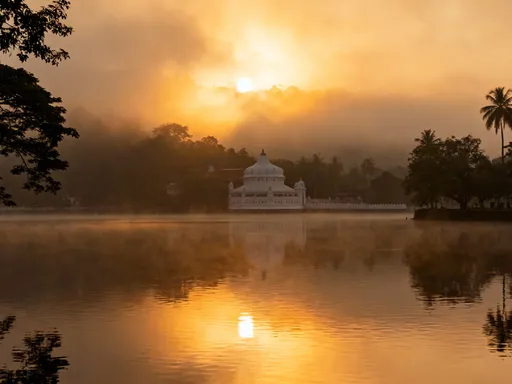
Kandy Lake, an artificial reservoir built in the 1800s, sits at the heart of the city like a mirror waiting to be framed. Its still waters reflect the surrounding hills, temples, and sky, creating symmetrical compositions that are both calming and visually powerful. The best time to photograph the lake is at sunrise, when the surface is calmest and the air is cool and clear. Arrive by 5:45 a.m. to secure a good vantage point along the eastern or northern promenade, where views of the Temple of the Tooth are most direct.
Reflections require patience and precision. A slight breeze can ripple the surface, blurring your image. Use a tripod to stabilize your camera and set a slow shutter speed — between 1/10 and 1 second — to smooth out minor disturbances. A polarizing filter can help reduce glare and deepen the contrast between water and sky. Position your camera low, ideally at water level, to maximize the reflection. Shoot in portrait orientation to emphasize vertical symmetry, especially when capturing the temple’s spire mirrored in the lake.
Weather plays a crucial role. On overcast mornings, the soft, even light minimizes harsh contrasts and produces a moody, introspective tone. Foggy conditions, though less predictable, can add a surreal quality — the temple may appear to float above a sea of white. Conversely, midday sun creates strong highlights and shadows, making reflections less effective. If shooting later in the day, focus on smaller details: a lone boat drifting across the water, children feeding fish at the shoreline, or lotus leaves glowing in the sunlight.
While the main pathways are popular with tourists, quieter spots exist just off the beaten track. Walk toward the southern end of the lake, near the Kandy City Center, where fewer visitors linger. Here, you can find unobstructed views framed by overhanging trees and flowering shrubs. These natural frames add depth and context to your images, turning simple reflections into layered stories. Always remain respectful of local visitors enjoying their morning walks — keep your distance and avoid obstructing pathways.
High Above the Hustle: The Best Hilltop Vantage Points
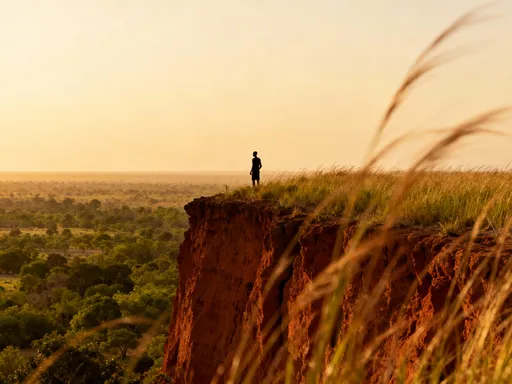
For sweeping panoramas of Kandy, nothing compares to the city’s surrounding hills. Elevated viewpoints offer a bird’s-eye perspective, revealing the intricate patchwork of rooftops, temples, roads, and forests that define the urban landscape. Among the most rewarding are Udamaluwa Hill and Ambasthale Estate, both accessible by car or tuk-tuk with a short hike at the end. These spots provide unobstructed 180-degree views, especially stunning during blue hour — the period just before sunrise or after sunset when the sky shifts through deep blues and purples.
Udamaluwa Hill, located to the northeast of the city, is particularly favored by local photographers. From its summit, you can see the Temple of the Tooth nestled beside the lake, with the central market and residential neighborhoods cascading down the slopes. Use a telephoto lens to isolate specific landmarks, or switch to a wide-angle to capture the full sweep of the valley. The early morning light bathes the city in gold, while evening shots benefit from the warm glow of streetlights beginning to flicker on.
Drone photography is permitted in some areas, but regulations require caution. Always check local guidelines before launching — flying near religious sites or crowded areas is often restricted. If allowed, drones can capture breathtaking aerial sequences, showing how the city blends into the surrounding hills. Even without a drone, a simple tripod and intervalometer can help you create time-lapse videos of the light changing over the landscape.
Navigating to these points requires care. Roads are narrow and winding, often shared with pedestrians and livestock. Hire a local driver familiar with the terrain, or join a guided photography tour for safety and access. Bring water, wear sturdy shoes, and carry a flashlight if returning after dark. While these locations are not widely advertised, they are known to residents, so always greet nearby families or tea stall owners with a smile and a polite nod — a small gesture that opens doors and fosters goodwill.
Beyond the Obvious: Off-the-Beaten-Path Trails with Visual Reward
For those willing to step beyond tourist maps, Kandy offers hidden trails that lead to secluded clearings with jaw-dropping views. These paths wind through tea plantations, forested ridges, and abandoned colonial-era pathways, offering solitude and surprise at every turn. One such route begins behind the Udawatta Kele Sanctuary and climbs steadily through dense jungle, emerging at a rocky outcrop with a panoramic view of the city framed by misty peaks.
Hiking these trails requires preparation. Wear breathable clothing and closed-toe shoes with good grip. Carry water, insect repellent, and a basic first-aid kit. Most importantly, go with a local guide. Not only do they know the safest routes, but they also understand the cultural significance of certain areas. Some spots are considered sacred or private, and entering without permission can be disrespectful. A knowledgeable guide ensures you photograph ethically while gaining access to places most visitors never see.
One memorable trail leads through a working tea estate on the outskirts of Kandy. As you ascend, the scent of fresh leaves fills the air, and workers in wide-brimmed hats move gracefully between rows. At the top, a clearing opens to reveal a valley blanketed in green, with morning fog curling around distant hills like smoke. This is the kind of scene that stops you in your tracks — not because it’s grand, but because it’s real. Capture the texture of tea leaves, the curve of a worker’s hand, or the soft focus of mist blending into sky.
Remember, the goal is not to conquer every trail but to move mindfully. Pause often. Listen. Let the environment speak. Some of the best photographs come from stillness — a single ray of light breaking through clouds, a bird taking flight, a distant bell from a hidden temple. These moments cannot be rushed. They emerge when you stop chasing and start receiving.
Chasing Light and Culture: When and How to Shoot Like a Local
To photograph Kandy like a true insider, you must align your rhythm with the city’s own. That means understanding not just the best times of day, but the best times of year. The dry season, from December to March, offers clear skies and consistent light — ideal for landscape and architectural photography. The inter-monsoon period in April and May brings dramatic clouds and sudden rain showers, creating moody atmospheres perfect for storytelling. The monsoon months, June to September, drape the hills in constant green and fill the air with mist — a dream for moody, atmospheric shots.
One of the most photogenic times to visit is during the Esala Perahera, a grand 10-day festival held in July or August. This spectacular procession features hundreds of drummers, dancers, and elaborately decorated elephants carrying the sacred casket. The streets come alive with color, sound, and movement. To capture the energy, arrive early to secure a good spot along the main route. Use a fast shutter speed to freeze motion, or experiment with slow shutter drag to convey motion and rhythm. Always be respectful — this is a religious event, not a performance. Avoid intrusive behavior, and never block the procession.
Building relationships with locals can transform your experience. A simple conversation at a tea shop, a shared smile with a vendor, or a quiet moment at a neighborhood shrine can lead to invitations for candid, intimate photography. Many residents are proud of their culture and happy to share it — if approached with humility and respect. Ask permission before photographing people, and when possible, offer to send them a copy of the photo. These small acts build trust and open doors to moments you’d otherwise miss.
As for gear, a versatile zoom lens (24-70mm or 24-105mm) covers most scenarios. Bring a tripod for low-light and reflection shots, and consider a rain cover for sudden downpours. A lightweight backpack keeps your equipment accessible yet protected. But more important than any tool is your mindset. Put the camera down sometimes. Walk without shooting. Let the city imprint itself on your memory. The best photographs come not from technical perfection, but from emotional truth — from moments when you’re fully present, camera or not.
Kandy isn’t just seen — it’s felt through the viewfinder. The best shots come not from chasing perfection, but from slowing down and letting the moment speak. Whether you’re framing ancient traditions or misty highlands, these viewpoints offer more than images: they offer connection. Pick up your camera, step off the map, and let Kandy reveal itself — one breathtaking frame at a time.