You Won’t Believe These Hidden Cultural Gems in Kolkata
Kolkata pulses with soul, but skip the crowded temples and tourist trails. I stumbled upon quiet courtyards where classical music spills from open windows, forgotten colonial mansions turned art hubs, and neighborhood theaters alive with Bengali drama. These offbeat cultural venues reveal the city’s true rhythm. If you’re craving authenticity over postcards, let me take you where few travelers go — deep into Kolkata’s living heritage.
The Soul Beyond the Surface
Kolkata is often celebrated for its grand Durga Puja and iconic Victoria Memorial, but its real cultural heartbeat lies hidden in plain sight. Beyond the postcard-perfect landmarks, tucked into narrow lanes and leafy neighborhoods, are intimate spaces where tradition is not performed for tourists but lived every day. These are the quiet courtyards where elders teach children Rabindra Sangeet, the modest studios where artisans mold clay with sacred focus, and the community halls where poetry readings unfold under dim bulbs. These spaces thrive on continuity, not spectacle.
What makes these hidden venues so powerful is their authenticity. Unlike curated museum experiences or timed cultural shows, these are living, breathing expressions of identity. They are sustained by passion, not profit. Families pass down musical knowledge across generations. Artists transform forgotten buildings into creative sanctuaries. Neighborhoods gather not for entertainment, but for connection. When you step into these spaces, you’re not observing culture — you’re participating in it.
For travelers, especially those seeking meaningful engagement, these off-the-beaten-path experiences offer something deeper than sightseeing. They provide a window into the values, rhythms, and resilience of Kolkata’s people. The city’s soul isn’t in its monuments, but in its moments — the sound of a sarod at dawn, the scent of wet clay in a workshop, the murmur of debate in a book-lined café. To experience Kolkata fully is to move beyond the surface and embrace the quiet pulse beneath.
Music in the Air: The Forgotten Music Academies
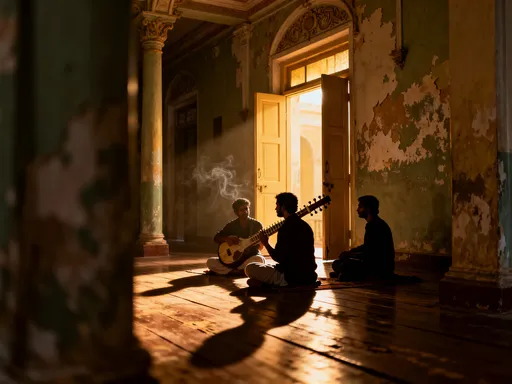
In the early morning light of North Kolkata, when the city is still wrapped in a soft haze, a different kind of energy stirs. In narrow residential lanes, behind unassuming gates and weathered doors, the notes of a sitar or the clear voice of a student practicing Rabindra Sangeet drift into the air. These are the city’s forgotten music academies — small, family-run institutions where Hindustani classical and Bengali musical traditions are preserved with quiet dedication.
One such academy, nestled in a century-old house in Shyambazar, has been teaching music for over 70 years. The wooden floors creak underfoot, and the walls, lined with framed portraits of legendary maestros, seem to hum with history. Incense lingers in the air, mingling with the scent of old books and polished instruments. Here, students as young as eight sit cross-legged on the floor, their eyes closed, absorbing the nuances of ragas passed down through generations. The guru listens intently, correcting a note with a gentle hand gesture.
These academies are not tourist attractions. They are sanctuaries of sound. Admission is informal, often based on recommendation or family ties. Yet, many welcome respectful visitors who come not to gawk, but to listen. Attending a private recital — perhaps in a courtyard under a banyan tree — feels like being let into a secret world. There are no microphones, no stage lights, just raw, unfiltered music born of discipline and devotion.
The preservation of these traditions is not taken for granted. In an age of digital music and fast entertainment, the slow, deliberate practice of classical forms is an act of cultural resistance. These academies do more than teach music; they sustain a way of life. For the traveler, spending an hour in such a space is not just educational — it’s transformative. It reminds us that culture is not something to be consumed, but something to be felt, learned, and honored.
Art in Abandoned Halls: Revived Colonial Spaces
Scattered across South Kolkata are relics of another era — colonial-era mansions with crumbling columns, overgrown gardens, and shuttered windows. Once homes to British officials or wealthy Bengali families, many of these buildings had fallen into disrepair, their grandeur fading with time. But in recent years, a quiet revolution has taken place. Local artists and cultural collectives have begun reclaiming these spaces, transforming them into vibrant centers for contemporary art, poetry, and performance.
One remarkable example lies in Bhowanipore, where a once-neglected mansion now hosts rotating art exhibitions, spoken word nights, and experimental theater. The building, built in the 1890s, features high ceilings, ornate woodwork, and a central courtyard that floods with natural light. The restoration was led by a group of young artists who pooled resources and volunteered their time. They did not erase the building’s history; instead, they highlighted it. Peeling paint was left in places as a testament to time, while modern installations were carefully integrated into the existing architecture.
Walking through the space today is a study in contrasts. A contemporary sculpture of reclaimed metal stands beside a vintage chandelier. A mural painted in bold colors covers a wall that still bears the marks of old family photographs. The air carries the scent of turpentine and jasmine from the garden. On weekends, visitors sip tea from clay cups while listening to poets read in Bengali and English, their words echoing through rooms that once hosted colonial banquets.
These revived spaces are more than galleries — they are acts of reclamation. By breathing new life into forgotten buildings, artists are not only preserving architectural heritage but also democratizing culture. Entry is often free or by donation, and the atmosphere is inclusive. There are no velvet ropes, no hushed tones — just open doors and open minds. For travelers, these spaces offer a rare opportunity to witness how history and modernity can coexist, not in conflict, but in conversation.
Neighborhood Theaters: Where Drama Comes Alive
Kolkata has long been known as a city of theater, but its true theatrical spirit doesn’t reside in grand auditoriums — it thrives in small, neighborhood stages. In areas like Girish Park, Kumartuli, and Bagbazar, local theater groups perform Bengali dramas in intimate halls that seat no more than a hundred. These venues are not polished or commercial; they are raw, passionate, and deeply rooted in community.
A night at one of these theaters is an experience unlike any other. The hall fills early, with families, students, and retirees squeezing into wooden benches. The air is thick with anticipation. There is no elaborate set — perhaps just a few chairs and a curtain made of old saris. But when the actors step onto the stage, the energy shifts. Their voices carry emotion that needs no amplification. A monologue about loss can bring the room to silence; a satirical scene can ignite roaring laughter.
These plays often tackle social issues — family dynamics, class struggles, political change — through the lens of Bengali literature and history. Many are adaptations of works by Rabindranath Tagore, Bijon Bhattacharya, or Badal Sircar. The performances are not rehearsed for perfection, but for truth. The actors, many of whom have day jobs as teachers or clerks, pour their hearts into every role. For them, theater is not entertainment — it is expression, resistance, and legacy.
Visitors are welcome, though they should come with humility. There are no programs in English, and subtitles are rare. But language is not always a barrier. The emotion on stage is universal. To attend such a performance is to witness culture in its most unfiltered form. It is also a reminder that art does not need grand stages to matter. Sometimes, the most powerful stories are told in the smallest rooms, to the most devoted audiences.
Crafting Culture: Hidden Workshops of Kumartuli
Kumartuli is famous for its Durga idols — towering, ornate figures that draw crowds every autumn. But beyond the main lanes, where tourists take photos of artisans at work, lie smaller, quieter studios that reveal a deeper layer of the neighborhood’s craft tradition. Here, in cramped rooms with clay-streaked walls, artisans create not just idols, but masks, scroll paintings, and miniature models that tell stories of folklore, mythology, and daily life.
One such workshop belongs to a fifth-generation mask-maker whose family has lived in Kumartuli for over a century. His studio, barely ten feet wide, is filled with half-finished masks — fierce deities, gentle sages, animal faces painted in bold colors. Each piece begins with a bamboo frame, then layers of cloth and clay, and finally, intricate hand-painted details. The process is slow, meditative, almost ritualistic. Before starting work each morning, the artisan lights a lamp and offers a silent prayer. For him, crafting is not just a skill — it is a spiritual practice.
Further down a side alley, a scroll painter works on a traditional patachitra — a long cloth scroll that unfolds like a storybook, depicting tales of gods and heroes. He sings the narrative as he paints, keeping alive an oral tradition that predates written records. His audience once traveled from village to village; now, he shares his work with curious visitors and cultural researchers. Though the form is ancient, his themes sometimes reflect modern concerns — environmental change, migration, urban life.
These artisans welcome visitors who come with genuine interest. They don’t expect purchases, but they appreciate questions asked with respect. Watching them work is a lesson in patience, precision, and devotion. Supporting them — by buying a small piece, donating to a community fund, or simply spreading the word — helps sustain these endangered crafts. In a world of mass production, these hidden workshops are sanctuaries of handmade meaning.
Cultural Cafés: Where Minds Meet
In the heart of South Kolkata, near the academic bustle of College Street, lies a café that feels like a living archive. The walls are lined with books — some dusty, some well-read — and the tables are often occupied by students, writers, and retirees deep in conversation. This is the historic Coffee House, a legendary meeting place where intellectuals have gathered for decades to debate literature, politics, and philosophy. Though the city has changed, this café remains a sanctuary of slow, thoughtful exchange.
But Coffee House is not alone. Across the neighborhood, a new generation of cultural cafés has emerged — small, independent spaces that blend coffee, books, and community. Some host open mic nights where poets read their work to a supportive audience. Others organize monthly book clubs focused on Bengali literature or feminist writing. A few double as art galleries, displaying works by local students and emerging artists.
These cafés share a common ethos: they are not just places to drink coffee, but to connect. The atmosphere is casual, but the conversations are often profound. You might overhear a discussion about Tagore’s poetry, a debate on urban design, or a plan for a community art project. There is no pressure to perform or impress — just space to think, speak, and listen.
For travelers, these spaces offer a rare glimpse into Kolkata’s intellectual life. They are not curated for outsiders, yet they are open to them. Sitting in one of these cafés with a cup of masala chai, you begin to understand that culture here is not just about performance or craft — it is also about dialogue. It is in these quiet corners, over coffee and conversation, that ideas are born, challenged, and carried forward. They are the unseen engines of the city’s cultural vitality.
How to Explore Responsibly
Discovering Kolkata’s hidden cultural gems is a privilege, but it comes with responsibility. These spaces exist because of community trust, not tourist demand. Entering them requires more than curiosity — it requires respect. The goal should not be to collect experiences like souvenirs, but to engage with humility and care.
Start by seeking permission. Many of these venues are not listed on maps or travel apps. They are best found through local connections — a conversation with a shopkeeper, a recommendation from a guide, or an invitation from a resident. If you’re unsure, ask politely. Most people are happy to share their culture, but they appreciate being asked rather than assumed.
When visiting, dress modestly and behave quietly. These are not performance spaces — they are places of practice, learning, and community. Avoid loud conversations, intrusive photography, or touching artifacts without permission. If recordings are allowed, ask first. During music or theater events, arrive on time and stay until the end as a sign of respect.
Support is best offered in thoughtful ways. Buying a small artwork, donating to a community fund, or purchasing a coffee at a cultural café all contribute meaningfully. But even more valuable is your attention — listening to a story, asking a sincere question, or simply being present. These acts of engagement matter more than any transaction.
Finally, travel slowly. Rushing from one hidden spot to the next defeats the purpose. Allow time to sit, observe, and absorb. Let conversations unfold naturally. Let the city reveal itself in its own time. When you move with patience and openness, Kolkata’s culture doesn’t just show up — it welcomes you in.
Conclusion
Kolkata’s true culture isn’t staged — it’s lived. By stepping off the beaten path, we don’t just see the city differently; we connect with its enduring spirit. These hidden venues aren’t just places — they’re keepers of memory, identity, and quiet rebellion against forgetting. They thrive not on fame, but on fidelity — to tradition, to community, to the belief that culture is worth preserving, even in silence.
For the traveler willing to look deeper, Kolkata offers not just sights, but soul. It invites us to move beyond the surface, to listen more than we speak, and to find wonder in the ordinary. These quiet corners — the music school at dawn, the revived mansion, the neighborhood theater — are not hidden because they wish to be secret. They are hidden because they do not seek attention. They simply exist, patiently, beautifully, waiting for those who come with open hearts.
Let your travels be about depth, not distance. Seek the unseen, and let Kolkata whisper its stories to you. In its quiet spaces, you’ll find not just a city’s heritage, but a way of being — thoughtful, resilient, and deeply human.