You Won’t Believe These Hidden Viewpoints in Sibiu
Sibiu isn’t just a pretty face in Romania—it’s a city that reveals its magic from above. I stumbled upon viewpoints that aren’t in every guidebook, each offering a different heartbeat of the place. From cobbled rooftops to quiet hilltop trails, the perspectives here don’t just show scenery—they tell stories. If you think you’ve seen Sibiu from the square, wait until you rise above it. This is more than sightseeing. This is seeing the soul.
The Heart of Transylvania: Why Sibiu Stands Out
Situated in the heart of Romania’s historic Transylvania region, Sibiu is a city where time seems to pause gracefully between centuries. Once a stronghold of the Transylvanian Saxons, this well-preserved gem carries the weight of over 800 years of layered history, evident in its cobblestone lanes, fortified walls, and pastel-hued buildings with watchful 'eyes' on their rooftops. Designated a European Capital of Culture in 2007 and recognized by UNESCO for its remarkably intact medieval core, Sibiu stands apart not just for its beauty, but for its living cultural fabric. Unlike some preserved towns that feel like museum exhibits, Sibiu breathes with authenticity—markets bustle, artisans work in plain view, and festivals fill the squares with music and laughter.
What makes Sibiu truly exceptional for travelers seeking depth is how its history is not only preserved but integrated into daily life. The city’s evolution—from Saxon settlement to Habsburg influence, through periods of industrial growth to its modern renaissance—has created a rich tapestry of architecture and urban design. This layered development offers something rare: multiple vantage points, both physical and metaphorical, from which to understand a place. While many visitors admire the Large Square and the Brukenthal Palace at ground level, the real revelations come when you ascend. Whether it’s a climb up an ancient tower or a walk along a restored rampart, elevation transforms the experience from observation to immersion.
Moreover, Sibiu’s geographical position enhances its visual appeal. Nestled between the Southern Carpathians and rolling Transylvanian hills, the city sits in a basin that naturally frames panoramic views. This topography, once strategic for defense, now serves the modern traveler as a canvas for unforgettable perspectives. The interplay of light across red rooftops in the morning, the shadow patterns cast by church spires at noon, and the warm glow of city lights emerging at dusk—all are best appreciated from above. For those willing to step off the main promenades and seek higher ground, Sibiu offers not just sights, but insights.
Council Tower: The Classic Rise with a View
No ascent in Sibiu is more iconic than the climb up the Council Tower, a medieval sentinel that has watched over the city’s main square since the 13th century. Standing at the entrance to the historic center, this fortified tower was once the seat of civic power and a crucial defensive structure. Today, it serves as one of the most rewarding viewpoints in the city, offering a sweeping panorama that encapsulates Sibiu’s charm in a single glance. The climb itself is part of the experience—174 steep, narrow steps wind upward through dimly lit passages, each turn revealing fragments of the tower’s past, from old prison cells to centuries-old stonework.
As you near the top, anticipation builds. The final platform opens to 360-degree views, and the payoff is immediate. Below, the rooftops of the old town stretch out like a patchwork quilt—terracotta tiles, slate-gray dormers, and the occasional gleam of copper flashing in the sun. The Orthodox Cathedral’s golden domes catch the light, while the spire of the Evangelical Cathedral pierces the skyline to the east. Winding streets such as Rumer Street and Huet Square unfold beneath you, their curves echoing the organic growth of a medieval settlement shaped by trade, faith, and community.
What makes the Council Tower particularly valuable is its central location. From this vantage, travelers gain spatial orientation—understanding how the city’s key landmarks relate to one another. It’s not just a photo opportunity; it’s a mental map in the making. While lines can form during peak season, especially in summer, the wait is often short, and the experience is well worth it. Families, solo travelers, and photography enthusiasts alike find common ground here, sharing quiet awe at the scene below. The tower staff, knowledgeable and courteous, often share historical tidbits, enriching the visit beyond the visual.
Importantly, the Council Tower also demonstrates how preservation and accessibility can coexist. Rigorous restoration work has ensured structural safety without compromising historical integrity. Handrails, lighting, and informational panels have been added thoughtfully, making the climb feasible for most able-bodied visitors. For those who may find the stairs challenging, nearby alternatives exist—but few match the symbolic and visual impact of this ascent. Starting your Sibiu journey here sets a tone of discovery, reminding you that the best views often require a little effort.
The Wall Walks: Where the City Breathes
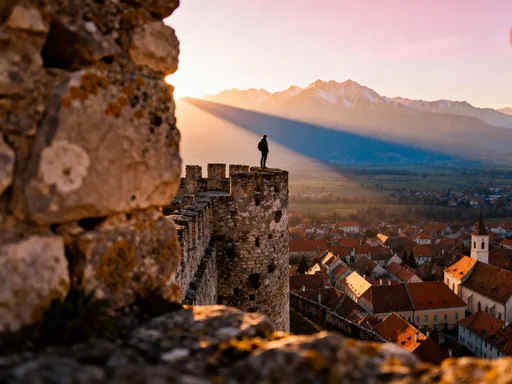
Extending from the Council Tower and encircling much of the old town, Sibiu’s restored defensive walls offer one of Europe’s most engaging elevated walking experiences. Originally built in the 13th century and expanded over time, these fortifications were designed to protect the city from invasion. Today, after decades of careful reconstruction, they serve a gentler purpose: inviting visitors to walk in the footsteps of medieval guards while enjoying dynamic, close-up views of both the inner city and the surrounding landscape. The wall walks are not a single path but a network of ramparts, towers, and lookout points, each offering a slightly different perspective.
Walking along these ancient stone paths, you move at a human pace, close enough to touch centuries-old masonry, yet high enough to see over rooftops and into hidden courtyards. The experience is both intimate and expansive. One moment, you’re peering down at a quiet garden where laundry flaps in the breeze; the next, you’re gazing across the valley toward the green folds of the Transylvanian plateau. The walls curve with the city’s original layout, revealing how medieval urban planning responded to both geography and defense. Watchtowers like the Torture Tower and the Fat Bastard Tower stand at strategic intervals, their names hinting at a past both pragmatic and grim.
What sets the wall walks apart from other viewpoints is their sense of movement and discovery. Unlike a single tower climb, this is a journey—each turn offers a new composition of rooftops, spires, and distant hills. The paths are well-maintained, with clear signage and safety railings, making them suitable for visitors of various ages and mobility levels. Along the way, informational plaques provide historical context, explaining the function of battlements, arrow slits, and former guard posts. Children especially enjoy the adventure-like quality of the walk, imagining themselves as young sentries scanning the horizon.
The wall walks also offer a quieter alternative to the bustling squares below. While the main tourist areas can become lively, especially during festivals, the ramparts maintain a more contemplative atmosphere. It’s not uncommon to find a bench along the route where you can sit, breathe, and absorb the scene. Early morning or late afternoon visits are particularly rewarding, when the light is soft and the city begins to glow. For photographers, the elevated vantage allows for unique compositions—capturing the rhythm of rooftops, the contrast between old and new, or the way shadows stretch across the city as the sun sets.
Sub Arini Park: Nature’s Overlook
Just a short walk from the city center, Sub Arini Park offers a refreshing shift in perspective—both physically and emotionally. One of Sibiu’s largest green spaces, this forested park follows the natural slope of the hills to the west, providing a seamless transition from urban life to mountain serenity. While many visitors come for the walking trails, playgrounds, and picnic areas, fewer make the gentle climb to the upper pathways that open into sweeping overlooks of the city below. Those who do are rewarded with a view that feels both expansive and peaceful—a verdant frame around Sibiu’s historic skyline.
The ascent through Sub Arini is not strenuous; paved paths and wooden staircases wind through beech and oak trees, with benches placed at regular intervals for rest. As you climb, the sounds of the city fade, replaced by birdsong and the rustle of leaves. The air grows cooler and cleaner, carrying the scent of pine and damp earth. Near the top, the tree line opens, and the city unfolds in the distance—its rooftops clustered like a village frozen in time, framed by the rolling hills of southern Transylvania. On clear days, the Carpathian Mountains form a hazy blue backdrop, a reminder of the wilder landscapes that lie beyond.
What makes Sub Arini special is its dual identity. It is both a local favorite and an underappreciated viewpoint for tourists. Residents come here to jog, walk their dogs, or enjoy a quiet moment away from traffic and noise. Families gather on weekends, flying kites or grilling in designated areas. Yet for the mindful traveler, the park offers something deeper: a chance to see Sibiu not as a destination, but as a living community nestled in nature. The view from above is less about architectural detail and more about context—how the city fits into its environment, how it breathes within the landscape.
Sunrise and golden hour are ideal times to visit. At dawn, mist often lingers in the valley, giving the city a dreamlike quality. As the sun rises, light spills over the rooftops, turning terracotta tiles into a sea of gold. In the late afternoon, the low sun casts long shadows, highlighting the texture of the old town. Photographers and artists find endless inspiration here, but even casual visitors pause in quiet appreciation. Sub Arini is not just a park—it’s a threshold between the human and the natural, a place where elevation brings clarity.
The Orthodox Cathedral Bell Tower: A Spiritual Vantage
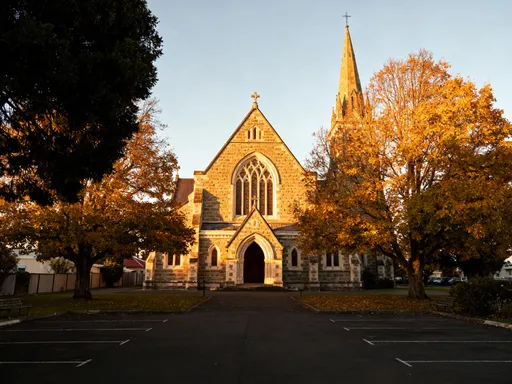
While the Evangelical Cathedral dominates the skyline of central Sibiu, the Orthodox Cathedral, located just beyond the old town, offers a quieter, more introspective viewpoint. Its bell tower, though less frequented by tourists, provides one of the most unique perspectives in the city—an eastward gaze over modern neighborhoods, tree-lined avenues, and the distant silhouette of the Carpathians. Access is modest and unassuming: a narrow staircase inside the cathedral complex leads to a small viewing platform, where visitors are greeted with a sense of calm and solitude.
The climb is shorter than the Council Tower, with fewer steps and more open landings, making it accessible to a wider range of visitors. The atmosphere inside is reverent but welcoming, with soft light filtering through stained glass and the faint scent of incense lingering in the air. Unlike the bustling energy of the main square, this space invites reflection. From the top, the view is less about historic charm and more about continuity—seeing how the old city blends with newer residential areas, how tradition and modern life coexist.
This vantage point is particularly valuable for understanding Sibiu’s full urban footprint. From here, you see schools, parks, and apartment buildings that house the city’s everyday life—scenes rarely captured in postcards but essential to its identity. The Orthodox Cathedral itself, with its golden domes and traditional Romanian architectural style, stands as a symbol of cultural resilience. Built in the 19th century, it represents a different strand of Sibiu’s history, one shaped by Romanian Orthodox faith and national identity.
Because this tower is not heavily promoted in guidebooks, it remains a hidden gem. Visitors often discover it by chance, drawn by the cathedral’s beauty or a recommendation from a local. The lack of crowds enhances the experience, allowing for uninterrupted contemplation. It’s a place to pause, to breathe, and to appreciate Sibiu not just as a historic monument, but as a living, evolving city. For those seeking a more spiritual or reflective moment during their travels, this ascent offers both peace and perspective.
Cristian Hill: The Local Secret Beyond the City
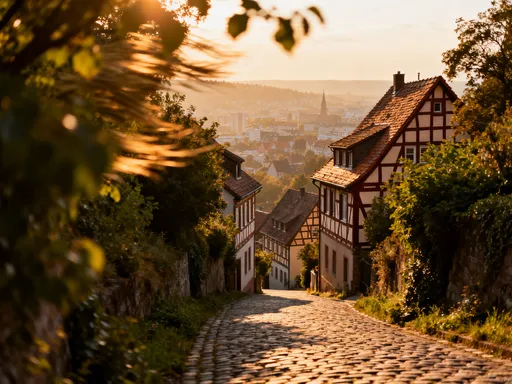
Just five kilometers northeast of Sibiu’s center, the village of Cristian lies beyond the urban sprawl, preserving a pastoral rhythm untouched by mass tourism. Known for its centuries-old church and traditional Saxon architecture, Cristian is also home to a quiet trail that leads up to Cristian Hill—a ridge offering one of the most breathtaking and underappreciated views of the city. The hike is moderate, about 30 to 40 minutes uphill through meadows and scattered woods, but the effort is repaid with a panorama that feels almost cinematic: Sibiu’s rooftops spread out below, framed by distant mountains and sky.
What makes Cristian Hill special is its authenticity. Unlike curated viewpoints within the city, this one feels discovered rather than designed. There are no ticket booths, no railings, no souvenir stands—just a natural clearing where locals sometimes gather for picnics or quiet contemplation. The path is marked but not paved, and the ascent rewards hikers with changing perspectives: first glimpses through the trees, then wider openings, and finally, the full sweep of the valley. In spring and summer, wildflowers dot the hillsides; in autumn, the foliage turns golden and crimson.
From the top, the view is unobstructed. You can trace the arc of the old town, identify the spires of major churches, and see how the city nestles into the landscape. On clear days, the Făgăraș Mountains rise in the distance, their peaks sometimes dusted with snow even in early summer. The silence is profound—broken only by the wind, bird calls, or the distant chime of church bells from Cristian’s fortified church. It’s easy to understand why locals cherish this spot, returning season after season to reconnect with nature and their hometown.
For travelers willing to venture beyond the city walls, Cristian Hill offers more than a view—it offers a story. It speaks of continuity, of a village that has watched over Sibiu for generations, of a landscape that has changed slowly but meaningfully. It’s a reminder that some of the best travel experiences come not from checking off landmarks, but from stepping off the path and letting a place reveal itself in its own time. A visit here pairs well with a stop in the village, where a traditional inn or family-run restaurant might offer homemade cheese, polenta, or local wine.
Why Viewpoints Shape the Travel Experience
Elevation does more than improve visibility—it transforms understanding. When we climb, we gain not just a wider view, but a deeper connection to place. In Sibiu, every ascent offers a new layer of meaning: the Council Tower teaches history, the wall walks reveal urban design, Sub Arini shows harmony with nature, the Orthodox Cathedral offers cultural insight, and Cristian Hill provides quiet reflection. These viewpoints are not just scenic stops; they are moments of synthesis, where architecture, landscape, and human life come together in a single frame.
Psychologically, height alters perception. From above, the details that overwhelm at ground level—crowds, signs, traffic—fade into a coherent whole. Patterns emerge: the geometry of rooftops, the flow of streets, the relationship between old and new. This shift mirrors the journey of the mindful traveler, who seeks not just to see, but to comprehend. In a world of fast tourism and curated Instagram moments, these elevated experiences invite slowness, presence, and curiosity.
Moreover, viewpoints foster emotional resonance. Standing above a city as it wakes or winds down, you feel a sense of intimacy despite the distance. You witness life unfolding—lights turning on, smoke rising from chimneys, children walking to school. These quiet observations build empathy and connection. They remind us that every city is more than its monuments; it is made of daily rhythms, shared spaces, and collective memory. In Sibiu, where history is visible in every stone, this emotional dimension is especially strong.
Seeking out viewpoints is, therefore, an act of intention. It requires stepping away from the obvious, investing time and effort, and embracing discomfort—steep stairs, winding paths, uncertain trails. But the rewards are lasting. The images stay with you, yes, but so do the feelings: awe, clarity, belonging. For the traveler who climbs with purpose, Sibiu offers not just views, but vision.
Final Ascent: Chasing the Last Light
As the sun begins its descent behind the Carpathians, a quiet settles over Sibiu. From a bench on Cristian Hill or a perch along the wall walks, the city transforms. The golden light softens, gilding the rooftops one last time before twilight takes over. Streetlamps flicker on, windows glow, and the first stars appear above the spires. This is the moment many climbers have waited for—not the peak of the day, but its gentle close.
In that stillness, something shifts. The city, so vibrant and busy below, feels peaceful, almost sacred. The effort of the climb fades, replaced by a quiet satisfaction. You’ve seen Sibiu from above, yes—but more than that, you’ve felt it. You’ve traced its history with your eyes, followed its rhythms with your breath, and carried its beauty in your memory.
Sibiu’s true magic isn’t in its postcard-perfect squares or its famous towers. It’s in the unseen angles—the rooftop silhouettes at dusk, the mist over Sub Arini at dawn, the distant view from a village hill. It’s in the act of seeking, of rising, of looking not just outward, but inward. For every traveler who climbs with curiosity, the city reveals a little more of its soul.
So when you come to Sibiu, don’t just walk its streets. Rise above them. Find your viewpoint. Chase the light. And let the city show you what it hides from the ground.